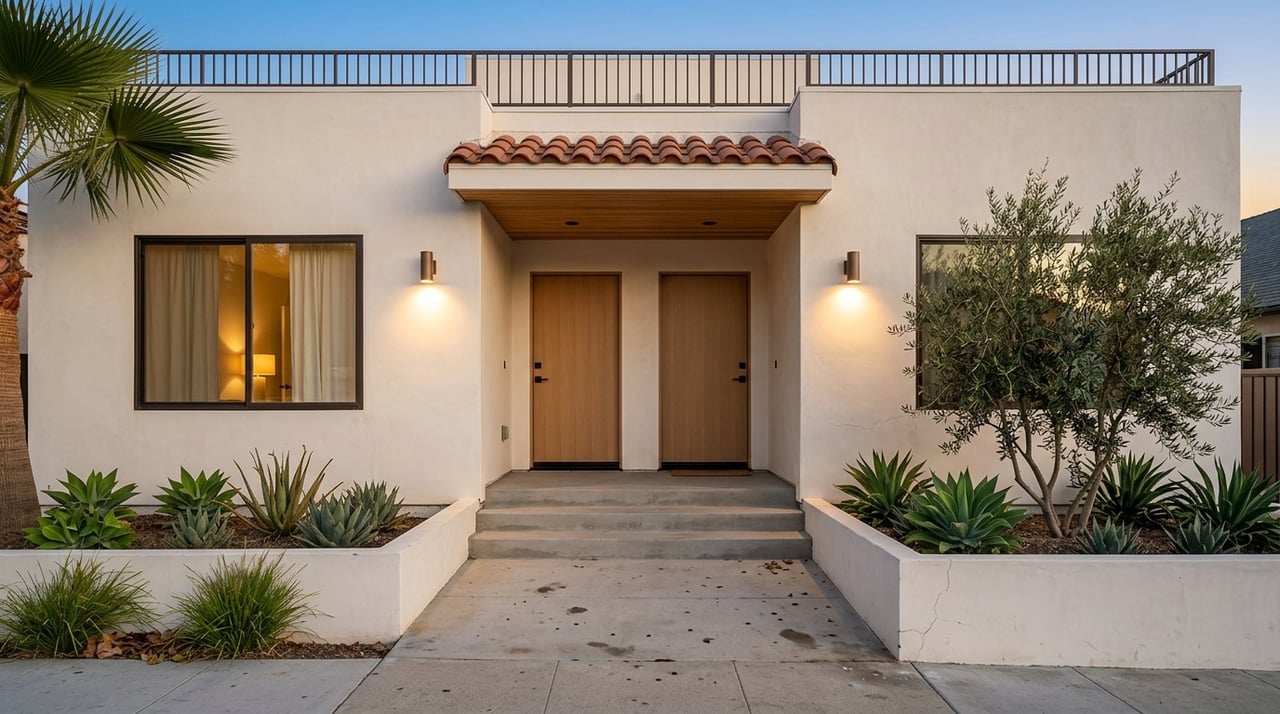
If you want to break into Los Angeles multifamily investing, small properties can be one of the most practical places to start. Duplexes, triplexes, and fourplexes sit in a unique middle ground where you are evaluating both housing and income potential, but local rules can change the numbers fast. If you are trying to buy smart instead of just buying hopeful, this guide will help you focus on what matters most in Los Angeles. Let’s dive in.
Why small multifamily matters in Los Angeles
In Los Angeles, entry-level multifamily usually means duplexes, triplexes, fourplexes, and other small residential income properties. City Planning materials place these homes within the broader category of multiplex or missing-middle housing, while HUD and Fannie Mae treat two- to four-unit properties as residential property types for appraisal and underwriting purposes. That makes these assets especially relevant for buyers who want a mix of residential financing logic and rental-income analysis.
Los Angeles is also a renter-heavy market, which helps explain why small multifamily stays on so many investors’ radar. Census QuickFacts reports a 2020-2024 median gross rent of $1,933 in the City of Los Angeles and $1,954 in Los Angeles County, alongside an owner-occupied housing unit rate of 36.0% in the city. In simple terms, renter demand is a major part of the local housing picture.
What entry-level investors should analyze first
When you look at a small multifamily deal in Los Angeles, start with the basics before you chase upside. The first question is not how much more the property could make. The first question is how the property performs today, under current leases, current rules, and current physical condition.
A practical first-pass review usually includes:
- In-place gross rent
- Vacancy and credit loss assumptions
- Operating expenses
- Building condition and deferred maintenance
- Permit and occupancy history
- Potential legal rent upside
- Rent regulation status
This sequence can keep you grounded. In Los Angeles, a property that looks under-rented on paper may have limits on rent growth, turnover timing, or renovation plans that materially change your return.
How to review income realistically
For small multifamily, most investors begin with actual rent roll income and then test whether there is any legal upside. The Los Angeles Housing Department defines net operating income as total gross income minus operating expenses, and it excludes debt service and depreciation from operating expenses. That distinction matters because it helps you separate how the property performs from how you choose to finance it.
If you are new to multifamily, this is one of the easiest mistakes to make. A property is not “better” just because a loan structure makes the monthly payment look manageable. You still need to understand the building’s true income performance before financing enters the picture.
Why rent upside needs extra caution in LA
In Los Angeles, you should be very careful with any listing that promises easy rent growth. If a property is subject to the city’s Rent Stabilization Ordinance or California’s Tenant Protection Act, the amount and timing of rent increases may be limited. That means “below-market rents” do not always translate into quick upside.
For many first-time investors, this is where underwriting can go off track. It is easy to assume a renovation, a unit turnover, or a lease reset will unlock major increases. In reality, Los Angeles requires you to look at regulation first, then value-add potential second.
Rent rules that can affect your deal
The Los Angeles Housing Department says the city’s Rent Stabilization Ordinance generally covers residential rental units in structures with a first Certificate of Occupancy issued on or before October 1, 1978. The city also requires annual registration for covered units, along with rent amount and tenancy information. If you are evaluating an older property in the City of Los Angeles, this should be part of your early due diligence.
At the state level, the California Attorney General states that most California properties more than 15 years old are covered by the Tenant Protection Act’s annual rent cap of 5% plus inflation, or 10% total, whichever is lower. The Attorney General also notes that duplexes are covered if the landlord does not live there, and stronger local ordinances still apply where they exist. In Los Angeles, local and state rules can overlap, so you need to know which framework controls the property you are reviewing.
Why expenses matter as much as rent
A strong rent roll does not automatically mean a strong investment. Operating costs such as taxes, insurance, maintenance, repairs, management, utilities, and reserves can change the picture quickly, especially in older Los Angeles buildings. Building age, deferred maintenance, and whether past work was properly permitted can all have a real effect on cash flow.
This is one reason entry-level multifamily in Los Angeles rewards careful buyers. Two buildings with similar rents may perform very differently once you account for repairs, code issues, or unpermitted work. A cleaner property history can be just as valuable as a higher rent number.
Permit history can protect your downside
In Los Angeles, permit and occupancy records are not a side detail. They are one of the best ways to verify whether upgrades, additions, conversions, or remodels were done properly. The city’s building permit data includes building, electrical, and mechanical permits, and the Certificate of Occupancy dataset states that a Certificate of Occupancy is required for every building or structure in the City of Los Angeles.
For you as a buyer, this is an important filter. A stylish renovation may look like value, but if the work was not properly documented, it may also come with compliance risk, added cost, or delays after closing.
What value-add usually looks like in Los Angeles
In smaller Los Angeles multifamily properties, realistic value-add is often less dramatic than buyers expect. It commonly comes from unit turns, modest interior improvements, better property operations, or regularizing existing space where allowed. It is usually not as simple as renovating and immediately pushing rents to a much higher number.
City Planning says qualifying unpermitted dwelling units require a formal six-step legalization process involving multiple city departments. That makes an extra unit or converted space something you should treat as a compliance question first. If the space can be legalized, that may become upside later, but it should not be underwritten as guaranteed value on day one.
Turnover can be slower and costlier than expected
Many new investors assume value-add begins when a tenant moves out. In Los Angeles, that assumption can be risky. Certain no-fault exits, including some owner-occupancy, family-occupancy, and resident-manager situations, can trigger monetary relocation assistance and procedural filing requirements according to the Los Angeles Housing Department.
That does not mean every turnover will be complicated. It does mean your business plan should not depend on a fast “vacate and renovate” approach without confirming the rules, timing, and costs tied to that specific property. In Los Angeles, turnover is not always just a leasing event. It can be a regulated event.
A practical public-record workflow
Public data can help you screen deals more carefully before you commit more time and money. The key is knowing what each source is good for and treating public records as a starting point, not the final answer.
A practical workflow looks like this:
- Los Angeles County Assessor Portal for parcel basics, ownership, and assessment research.
- ZIMAS for zoning, land use, planning context, planning application history, and building permit history.
- LADBS permit and Certificate of Occupancy records to confirm permitted work and occupancy status.
- Census QuickFacts for broad market context, including rent and owner-occupancy trends.
This order works well because it moves from general property identity to legal use and then to building-level compliance. That can help you spot red flags before they become expensive surprises.
Questions to ask before you buy
If you are considering your first Los Angeles multifamily deal, keep your review process simple and disciplined. A few direct questions can save you from a lot of bad assumptions.
Ask questions like:
- What is the current in-place income?
- Is the property subject to the city’s Rent Stabilization Ordinance?
- Is the property subject to California’s Tenant Protection Act?
- What is the first Certificate of Occupancy date?
- Does the recorded unit count match current use?
- Were renovations, additions, or conversions properly permitted?
- Is there deferred maintenance that will affect near-term cash flow?
- Is the value-add story legal, operational, and realistic?
If a seller’s upside story depends on vague language, undocumented improvements, or aggressive rent assumptions, slow down. In Los Angeles, the strongest deals are often the ones with the clearest paper trail.
How to think about your first LA multifamily purchase
Your first small multifamily investment in Los Angeles does not need to be flashy to be smart. In many cases, the better entry-level buy is the property with understandable rents, manageable expenses, clear records, and a realistic path to improvement. Predictability matters, especially in a market shaped by rent rules, permitting standards, and a large renter base.
That is where experienced local guidance can make a real difference. If you want help evaluating a duplex, triplex, or fourplex in Los Angeles with a practical, investor-minded lens, connect with West Life Realty for boutique guidance backed by market strategy, off-market insight, and high-touch service.
FAQs
How do you know if a Los Angeles multifamily property is rent-controlled?
- Start with the property’s first Certificate of Occupancy date and review LAHD guidance. The city’s Rent Stabilization Ordinance generally covers residential rental units in structures with a first Certificate of Occupancy issued on or before October 1, 1978.
What does net operating income mean for a Los Angeles small multifamily property?
- LAHD defines net operating income as total gross income minus operating expenses, and it excludes debt service and depreciation from operating expenses.
Can a renovation automatically justify higher rents in Los Angeles multifamily investing?
- No. Rent growth may be limited by the City of Los Angeles Rent Stabilization Ordinance, California’s Tenant Protection Act, or other property-specific factors.
Is an unpermitted extra unit in Los Angeles a good value-add opportunity?
- It may be an opportunity, but it should be treated as a compliance issue first because City Planning says qualifying unpermitted dwelling units require a formal legalization process.
What public records should you check for a Los Angeles duplex, triplex, or fourplex?
- A practical starting workflow is the Los Angeles County Assessor Portal for parcel basics, ZIMAS for zoning and planning history, LADBS records for permits and occupancy, and Census QuickFacts for broad market context.
Why is turnover planning important for Los Angeles multifamily investors?
- Some no-fault tenant exits in Los Angeles can involve relocation assistance and required filings, which can affect both your timeline and your investment economics.