A Newport Beach condo sale nearly came apart over something that had nothing to do with the unit's price, its square footage, or its view. The buyer had an accepted offer, a rate locked, and a closing date on the calendar. Then the lender's inspection report came back citing 65 separate areas of dry rot and staircase deterioration, tied to a compliance gap under a state law called SB 326. Conventional financing was denied on the spot. The buyer only closed because they found a credit union willing to underwrite the loan outside Fannie Mae and Freddie Mac guidelines. Most buyers in that position do not have that option.
The law behind that denial has been on the books since 2019. What makes 2026 different is that its consequences are landing now, and a lot of the confusion in Newport Beach comes from a simple date mix-up that has nothing to do with market conditions and everything to do with two different statutes that sound like the same rule.
The Deadline Everyone Has Wrong
California actually has two balcony inspection laws, and they are frequently confused with each other in HOA boardrooms and living rooms alike. SB 721 covers apartment buildings, where the landlord owns the whole structure. That law's deadline got pushed from January 1, 2025 to January 1, 2026 under a later bill, AB 2579.
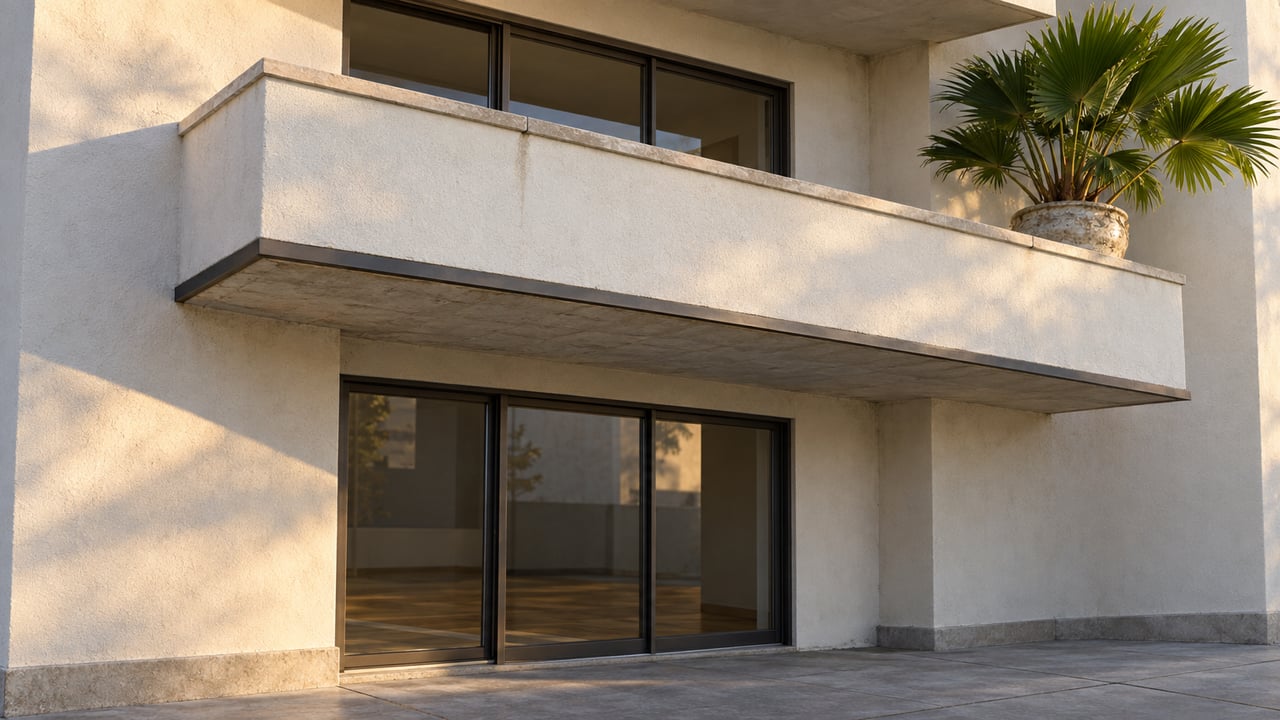
SB 326 is the separate law that applies to condominiums and townhomes governed by an HOA, and it is codified as Civil Code Section 5551. Its first inspection deadline was also January 1, 2025, but unlike the apartment law, it never received an extension. Any Newport Beach condo association that has not completed its initial inspection of exterior elevated elements, meaning balconies, decks, stairways, and walkways supported substantially by wood and more than six feet off the ground, has been out of compliance since that date passed, not approaching it.
The overlap in dates is exactly why so many condo boards believe they still have until 2026. They are thinking of the wrong law. For a reader trying to buy or sell a Newport Beach condo this year, that is not a technicality. It is the difference between a clean escrow and a financing denial three weeks before closing.
What an Inspection Actually Costs
The inspections themselves are not simple walkthroughs. Under Civil Code 5551, they have to be performed by a licensed structural engineer, architect, or, since a mid-2024 update called AB 2114, a licensed civil engineer. The sampling standard requires 95 percent confidence with a margin of error no greater than 5 percent, which is a more rigorous bar than the flat 15 percent sample the apartment law uses. That rigor is why buildings that skipped the inspection are now finding real structural issues rather than cosmetic ones.
The dollar figures scale with what inspectors find:
| Cost category | Typical range |
|---|---|
| Full building inspection (mid-size complex) | $15,000 to $50,000 |
| Per-balcony repair | $10,000 to $25,000 |
| Full balcony reconstruction, high-cost coastal market | $40,000 to $60,000 per unit |
| Reported special assessments where damage was extensive | $40,000 to $175,000 per unit |
Salt air accelerates the kind of wood deterioration SB 326 is designed to catch, which is part of why coastal buildings tend to show up on the higher end of that range rather than the lower one. A Newport Beach association that deferred maintenance for a decade is not comparing favorably to an inland Orange County building with the same age and unit count.
The Disclosure Rule Just Closed the Information Gap
Until recently, an HOA's SB 326 status was something a buyer had to think to ask about. That changed with SB 410, effective January 1, 2026, which requires the balcony inspection report to be included in the reserve study disclosures that HOAs are already required to give prospective buyers. Buyers now receive the inspection findings as part of the standard disclosure package, without needing to request them separately.
There is a second layer to this that matters just as much. If an HOA completed its inspection but never folded the results into its reserve study, the reserve study itself is missing a legally required component, and the percent-funded number a buyer sees on paper may not reflect the building's actual condition. If the HOA never did the inspection at all, the reserve study has a blind spot on structural condition that no amount of healthy-looking reserves can paper over. Either way, a reserve study that looks solid is not proof that the building is.
Why Lenders Enforce This More Than Any Government Agency Does
Here is the part that catches people off guard. SB 326 itself does not specify a fine or a state agency that audits compliance. The California Department of Real Estate does not enforce the Davis-Stirling Act, and local building departments have no jurisdiction over an HOA's internal inspection obligations. On paper, a non-compliant board faces no direct government penalty.
In practice, the enforcement happens somewhere else entirely: at the lender's desk and the insurer's renewal table. Conventional loans underwritten to Fannie Mae and Freddie Mac guidelines increasingly require proof of SB 326 compliance before approval, which is exactly what killed the financing in the case above. Insurance carriers renewing master policies are asking the same question, and associations that cannot produce a clean report are running into renewal friction of their own. The law has no teeth in statute. It has teeth in the mortgage market, and that is a much faster and less forgiving enforcement mechanism than a government fine would ever be.
For associations that did complete their inspection on time, there is a long runway before this comes up again. The law runs on a nine-year cycle, so a board that met the January 1, 2025 deadline is not due for a re-inspection until January 1, 2034. The buildings creating problems right now are specifically the ones that missed the first deadline, not the ones approaching a routine second look.
What to Ask Before You Write an Offer or Sign a Listing
For a buyer, the sequence is straightforward. Ask for the SB 326 inspection report directly, not just the reserve study summary, since a summary can technically exist without the underlying report being current. Confirm whether the report has been incorporated into the association's most recent reserve study, since a completed inspection that never made it into the reserve study still leaves a documentation gap. Check with your lender early about whether their specific loan program has an overlay tied to balcony compliance, because that answer can vary by lender even within conventional financing, and finding out during your contingency period is far better than finding out during underwriting.
For a seller or an HOA board preparing to list units, the useful move is to get ahead of the question rather than wait for a buyer's agent to raise it. If the inspection is done and clean, that report is now an asset in the listing conversation, not a liability, since a compliant building with clean paperwork removes exactly the friction that stalled the case above. If the inspection has not happened, the honest calculation is that the cost of doing it now is smaller than the cost of a buyer's lender discovering the gap mid-escrow and walking, or of an insurer declining to renew the master policy at the worst possible moment.
Planned developments, where each owner individually owns and maintains their own exterior structures rather than the HOA owning the common building envelope, are generally excluded from SB 326. The distinction comes down to what the CC&Rs actually assign to the association, so it is worth confirming rather than assuming based on how a property looks.
Frequently Asked Questions
Does the 2026 extension I keep hearing about apply to my condo? No. That extension, under AB 2579, applies only to SB 721, the apartment building law. SB 326, which governs condo and townhome HOAs, kept its original January 1, 2025 deadline with no extension.
What if my HOA completed the inspection but I've never seen the report? You have a right to request it. Under SB 410, effective January 1, 2026, it should also now appear as part of the reserve study disclosures given to buyers, so a seller or listing agent should be able to produce it without difficulty.
Is a townhome automatically covered by SB 326? It depends on the governing documents. If the HOA owns and maintains the exterior structure, including any shared balconies or walkways, SB 326 generally applies. If each owner is responsible for their own exterior elements under a planned development structure, it typically does not.
For a deeper explanation of how Civil Code 5551 fits into the broader Davis-Stirling framework, the Davis-Stirling reference guide on elevated structure inspections lays out the statute in plain terms.
If you are weighing a Newport Beach condo purchase, listing a unit, or sitting on an HOA board trying to get ahead of this before it becomes a problem in your own escrow, West Life Realty can help you pull the actual inspection and reserve study documents for a specific building and read them before you are under contract, not after.